
Acupuncture in Bloor West Village & High Park
What is Acupuncture and What Can It Do For You?
Interested in what acupuncture can do for you? Feeling stressed, run down, depressed or running on empty? Suffering from whiplash, arthritis, high blood pressure or are you downed by PMS every month?
What do these have in common? These are some of the ailments that patients often ask about when considering acupuncture. In acupuncture, very fine needles are inserted in pivotal points throughout the body to support balance and help the body return to better function.
Modern science has explored how inserting fine needles at acupuncture points may stimulate the nervous system and release chemicals such as endorphins to help alleviate pain. However, acupuncture is much more than pain reduction or pain management.
The Invisible Network of Energy
There is an intricate, invisible network that runs through our body. Through it, life-enhancing energy or qi travels, nourishing our organs, our brains, our tissues, our skin, eyes, and our entire being. The qi channels are called meridians.
According to Traditional Chinese Medicine (TCM), there are 12 major pathways and 8 randomly spaced ones in our bodies, each of which travels through a major organ.
When qi is blocked or imbalanced somewhere in the body, it can lead to pain, dysfunction or loss of function. You may be familiar with the practice of linking external points on your body with internal organs — for example, the points on either side of your nose are linked to your lungs.
The needles used in acupuncture stimulate certain crucial points, known as pressure points, to open qi blockages which may exist and to encourage blood flow.
Qi and Meridians
If you think of the energetic network as a transportation system, each pressure point can be thought of as a switch that helps influence the flow of qi.
Point Selection
The selected points correspond to meridians that divide the body — 12 main, bilateral meridians and eight randomly spaced ones.
Training and Care
The acupuncturist is trained to select the right needles for the right points so that energy flows through to allow the body’s natural healing process to take place.
Yin, Yang and Acupuncture
Acupuncture is a 3,000-year-old practice and works on the principle of balancing yin and yang. Yin is the feminine, calm, cooling and grounded quality in each of us. Yang energy is energetic, masculine, fiery and motivated and is the counterweight.
Yin and yang are most effective when operating together, and in optimal health, they work together to promote the proper flowing of qi.
In our modern stress-filled lives, qi blockage can happen easily. Stress, frustration and anger, external injuries from a fall or accident, or even a cold may disrupt energy flow. Leading a sedentary life without exercise or poorly maintaining your body may also decrease qi flow.
Benefits of Acupuncture
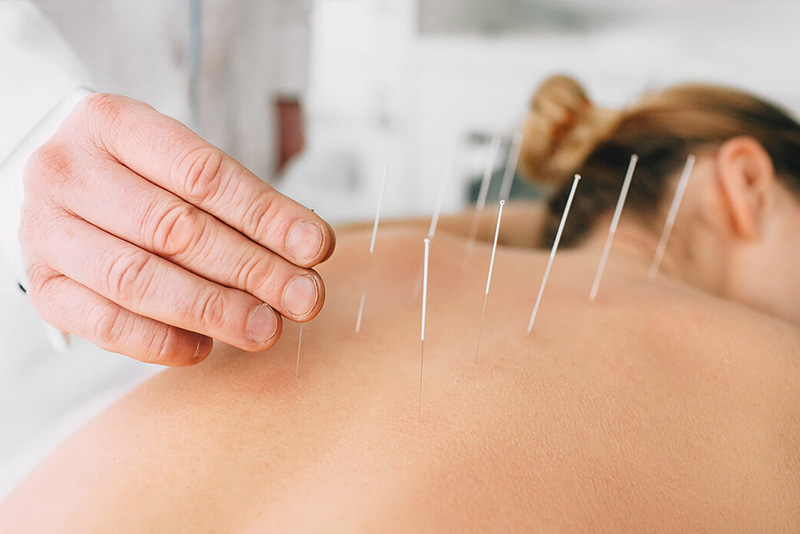
Acupuncture re-energizes the body. It may help support the immune system, nervous system, muscle tone, hormone balance and the body’s natural response to discomfort.
It may also support digestion, helping the body absorb nutrients from food and discharge what it does not need, while supporting the efficient function of internal organs. The goal is to help the body function more optimally.
For related care options, learn more about Traditional Chinese Medicine, Registered Massage Therapy, or view our acupuncture rates.
Acupuncture for Wellness and Prevention
Acupuncture can be used as a form of preventative or wellness therapy. It may also be used alongside other medical treatments or as part of a broader Traditional Chinese Medicine care plan.
Patients may ask about acupuncture for high blood pressure support, fertility support, cosmetic acupuncture, anti-aging care, stress, pain, or general wellness. Cosmetic acupuncture uses needles inserted on the face to stimulate blood flow and support collagen production.
If you are unsure whether acupuncture, TCM, cupping, herbs, or massage therapy is the right starting point, contact TX Health Centre.
Acupuncture and Herbs
TCM works on the principle of balancing yin-yang energies. If there is an excess or a deficiency, it is not just the body which suffers. Emotions may be affected as well.
For example, after a period of concentrated stress, do you find yourself short-tempered and less tolerant? Or if you are too sluggish, do you find yourself lacking in motivation and energy to accomplish what you need to do?
An acupuncturist may sometimes recommend herbal remedies to supplement the benefits gained from acupuncture. These herbs are used in Traditional Chinese Medicine to support the body’s foundation and may be adjusted to the individual.
Examples of Conditions Associated With Acupuncture
The World Health Organization has identified a range of conditions where acupuncture has been studied or used. The following are examples of concerns patients may ask about:
Reference: WHO acupuncture reference report
What Acupuncture Treats
This is by no means a complete list. Feel free to ask us about any conditions you may have.
Reference: WHO acupuncture reference report
Book Acupuncture in Bloor West Village
Rates and Appointment Lengths
View current pricing for clinic acupuncture, cosmetic acupuncture, cupping, herbs, and related treatment options.
Experienced Acupuncture Care
TX Health Centre is staffed by acupuncturists with more than 21 years of experience and training in China. If you have questions about acupuncture or whether it may be the right starting point, call us to discuss how we can help.
Traditional Chinese Medicine
Learn more about Chinese herbal remedies, cupping, Tui Na, moxibustion, and broader TCM care options.
Registered Massage Therapy
Massage therapy may be a helpful option for muscle tension, soreness, stress, postural strain, and relaxation.
All Services
Compare acupuncture, TCM, cupping, herbs, Tui Na, and massage therapy on our full services overview page.
Frequently Asked Questions About Acupuncture:
What is acupuncture?
Acupuncture is an ancient non-invasive method of restoring energy, balance and healing through inserting very fine needles at designated points on the body. The needles inserted are manipulated either by the hand or by electrical stimulation, called electroacupuncture. As a treatment, it is used for a wide variety of physical and emotional disorders and can be used on its own or to support other medical treatments. A TCM practitioner may combine acupuncture with other TCM modalities such as Chinese herbal medicine, Tui Na massage or cupping.
How does it work?
Energy runs through the body through an invisible and extensive network called meridians. When there is a blockage in any of these channels, it prevents the free-flowing energy from reaching other areas or organs. Stimulating the precise acupoints with very fine needles removes the blockages and restores the qi flow.
Is it safe? Does it hurt? Are there side effects?
Needles inserted during an acupuncture treatment should be painless. Patients’ experience might be different. Generally,these symptoms may be expected (minimal bleeding) and desired (tingle, tight sensation – “de qi response”). Patients should inform the practitioner if any discomfort arises. There are some minor risks associated with acupuncture treatment, including, but not limited to some slight bruising of the skin and/or slight bleeding, and some pain at the site of the needle insertion, dizziness or fainting. These events are unusual and of short duration. You are supposed to inform your Acupuncturist if you have any condition and/or take medication that interferes with blood clotting. You must notify your Acupuncturist if you have a pacemaker as electrical stimulation is contraindicated.
Is there a risk of infection?
Acupuncture needles are sterile, designed for single-use only, and disposed of as surgical instruments. Needles come in varying diameters.Most of them are very fine and flexible. With professional treatments in compliance with hygiene routines and procedures,the risk of infection is minimum.
Is it really effective?
Acupuncture has been used in the healing tradition in China for several thousand years. It is currently widely practiced across the globe, and is increasingly used in the USA and Canada as a non-invasive, alternative form of healing.
How often do I need acupuncture?
This varies with the individual and is dependent on whether the patient has an acute condition such as an accident injury, a chronic problem or is being treated for wellness. Frequency varies from one or two times a week for several months to a few times a year for a physical tune-up. For cosmetic acupuncture, we recommend twice weekly for two weeks, with a follow-up of weekly treatments for six weeks. After that, maintenance sessions are only required once every couple of months, or the entire cycle can be repeated within a half year.
How should I dress for an acupuncture session?
Needles can be inserted anywhere on the body, the back, front, abdomen, hands, feet or the head. Dress in loose comfortable clothes to provide easy access to the required acupoints.
Book an Acupuncture Session
Email Us
info@txhealthcentre.com
Call Us
416-535-8588
Visit Us
2272 Bloor St. West 2nd Floor, Toronto, ON, M6S 1N9
(We’re on the 2nd floor above The Ten Spot)